A school where primary students feel at ease
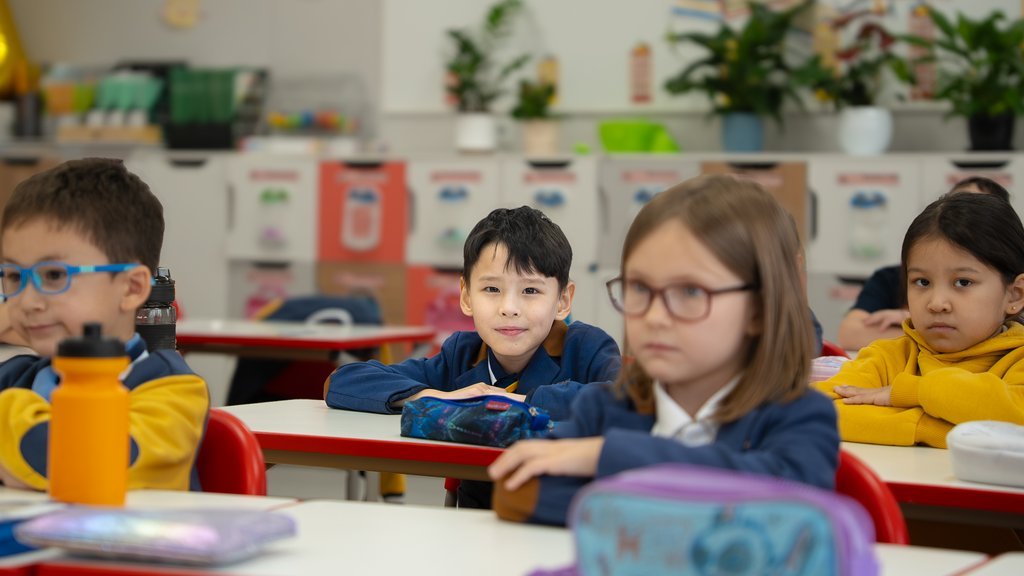
For a 6–10 year old child, school is a second home for half the day. That's why safety for us means more than just security at the entrance—it's the atmosphere inside: making sure the child feels comfortable, isn't afraid to ask for help, and parents can drop them off without worry.
Physical Security
Entering Space School Aktau without a security check is impossible. There are several levels of control at the entrance:
- Face ID — a facial recognition system records everyone entering and leaving
- Turnstiles with automatic access control
- Security guards on the school grounds throughout the school day
- Concierge service at the entrance — welcomes parents and guides students
- Video surveillance covers entrances, hallways, recreation areas, and the territory around the school
Children may only leave the school accompanied by a parent or another adult specified in the application. No verbal agreements are accepted.
A Bullying-Free Atmosphere
Primary school lays the foundation for how a child will treat themselves and others. That is why Space School runs the PSHE (Personal, Social, Health and Economic education) program — a British methodology that teaches children emotional literacy from the first grade.
In PSHE classes, children learn to:
- understand their emotions and talk about them
- notice when another child is upset
- resolve arguments without shouting or fighting
- recognize boundaries — their own and others'
The PSHE program is a standard in British primary schools. Children who learn to talk about their feelings and resolve conflicts with words from an early age are less likely to become victims of bullying or initiate it themselves.
Approachable Teachers
In primary school, a child does not yet know how to articulate "I have a problem." Therefore, Space School teachers are attentive to signals: a quiet child who suddenly becomes even quieter; a cheerful one who suddenly gets sad; a mood swing after recess. Every teacher is a trusted adult a child can approach and be heard. They won't brush them off, tell them to "figure it out yourself," or devalue what matters to the child.
School Psychologist
Our campus has a psychologist available to children and parents. Support is especially important for primary school students: the transition from kindergarten to school, adapting to a new group, fear of making mistakes, anxiety about grades — these are all normal challenges of this age that are easier for a child to overcome with the help of a specialist.
The psychologist conducts individual consultations, monitors the emotional state of the children, and works with classes in a group setting. All requests are confidential.